
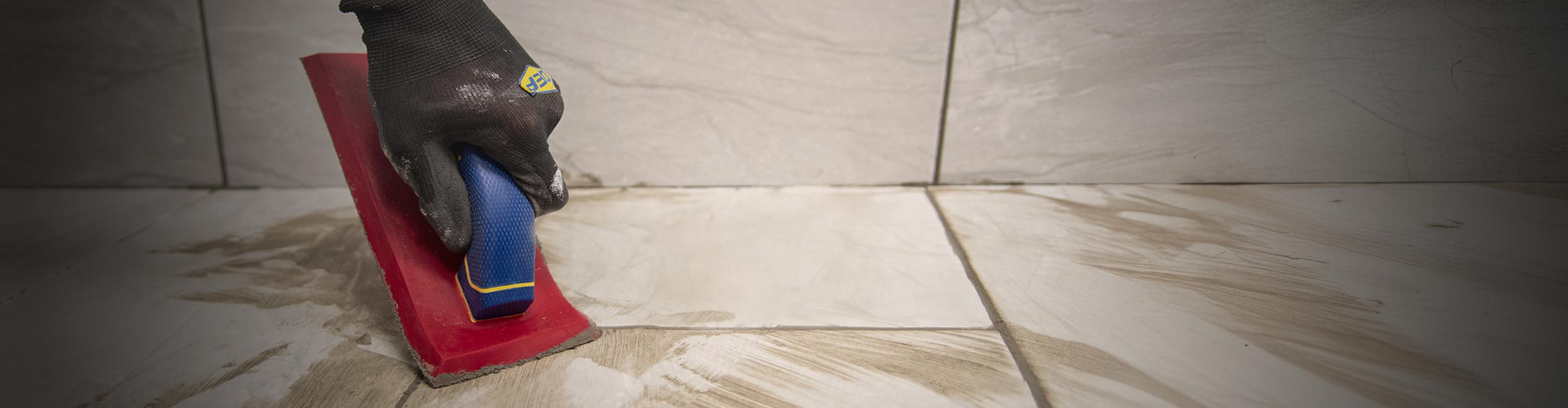
Floats
Pro Tip: When choosing a float for tile installation, focus on rubber pad hardness, edge shape, and comfort. Maximum pad flexibility is preferred by professional flooring installers.
Soft rubber floats are highly flexible and less dense. They conform easily to contours and are ideal for delicate, highly textured, or soft materials like glass or marble that are prone to scratching. A soft rubber float provides maximum flex and leverage for working grout into tile joints.
Medium/Standard rubber is ideal for most standard ceramic and porcelain tiles using cement-based grouts. They are the best all-around choice for standard ceramic tiles.
Non-stick gum rubber: Preferred by the professional tile installers, this type of float forces cementitious or epoxy grouts securely into the joints, preventing air bubbles, gaps, and voids.
Keep in mind that a grout float gives you specific functional advantages when installing tile:
- It allows you to fill joints completely
- Helps to protect the surface of your tile
- Cleans off excess
- Prevents gouging grout
This collection is empty
Continue shopping